

Why does it feel like the dust wins every time the Santa Ana winds kick up, even when your windows are tightly shut? You've likely spent hours dusting and vacuuming, yet the sneezing and itchy eyes persist. It's frustrating to feel like your own home isn't the sanctuary it should be, particularly when you're also watching your energy bills climb just to keep the air filtered. If you're focused on reducing allergens in your Orange County home, it's important to realize this is often a mechanical battle against local environmental factors rather than a simple cleaning issue.
We believe that your home should be a place of rest, not a source of physical discomfort. This guide explains how to transform your living space into a reliable sanctuary using professional air quality strategies and HVAC optimization. We'll provide expert validation on which upgrades actually work, from high-efficiency filtration to the critical role of your ductwork. Our goal is to provide a clear, methodical plan to help you improve your sleep quality and lower indoor triggers without the guesswork or high-pressure sales tactics.
Key Takeaways
- Understand how local environmental factors like Santa Ana winds and coastal humidity bypass standard home seals to introduce irritants.
- Learn why standard one-inch filters often fail and how specific HVAC optimizations are essential for reducing allergens in your Orange County home.
- Evaluate the effectiveness of professional-grade indoor air quality technologies, including whole-home purifiers and UV-C light systems.
- Identify the signs of compromised ductwork, such as uneven dust patterns, which can pull attic insulation and debris into your living areas.
- Develop a proactive maintenance strategy that shifts your focus from reactive cleaning to long-term air quality management.
Understanding the Orange County "Allergen Landscape"
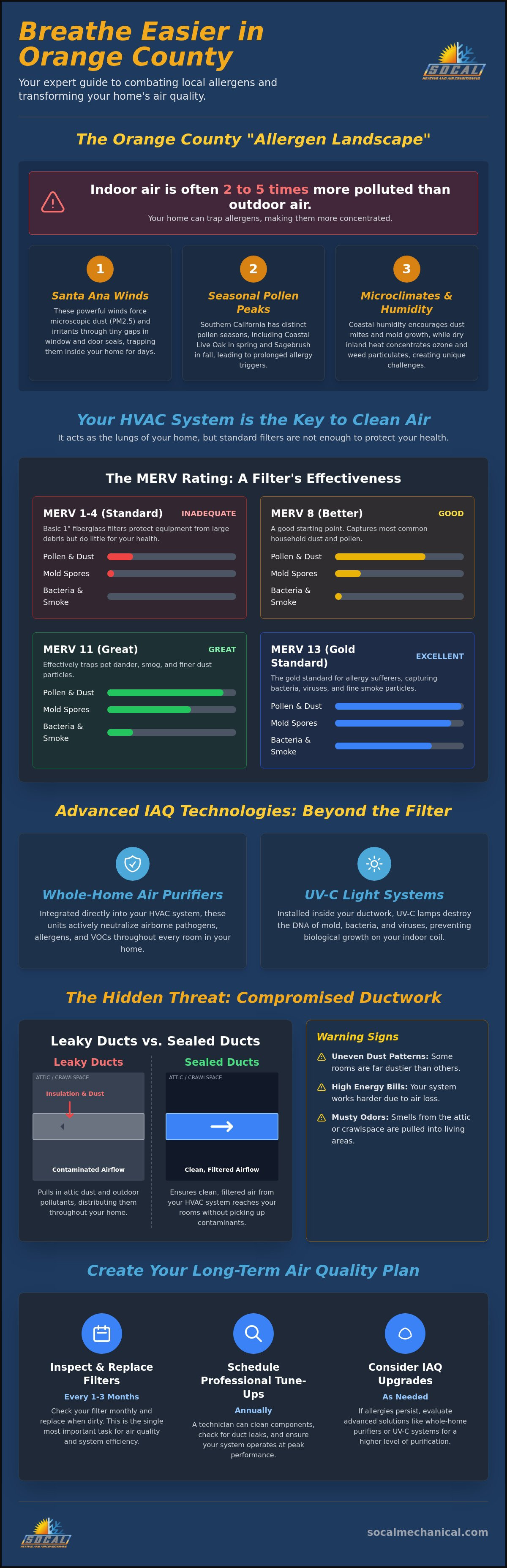
Orange County presents a unique set of challenges for homeowners trying to maintain a healthy living environment. While the weather is often mild, the geographic diversity between the coastal humidity of Newport Beach and the inland heat of Tustin creates distinct microclimates. These variations influence how pollutants behave inside your home. It's a surprising fact that indoor air is frequently two to five times more polluted than the air outside. To understand the risks, you can review this comprehensive overview of indoor air quality, which details how common pollutants and biological triggers impact health. When you're focused on reducing allergens in your Orange County home, you have to look beyond the obvious sources and consider how our local environment dictates your indoor comfort.
The Impact of Santa Ana Winds on Indoor Quality
The Santa Ana winds are a primary driver of poor air quality in Southern California. These high-pressure events do more than just blow leaves around. They force microscopic particulates into wall cavities and through the smallest gaps in window seals. This process keeps fine dust, known as PM2.5, suspended in your living space for days. Many residents assume that staying indoors is a total solution. However, the pressure differential created by these winds literally pushes dust and outdoor irritants into the home. Simply closing your windows isn't enough during a wind event because your home isn't an airtight box. Without professional air quality strategies, these particulates settle into your carpets and upholstery, lingering long after the winds have died down.
Seasonal Pollen Peaks in Southern California
The local pollen calendar in Orange County is relatively predictable, though it's influenced by specific weather patterns. Spring typically brings a surge in Coastal Live Oak pollen, while the fall months are often dominated by sagebrush and various weeds. In a mild year like 2026, these pollinating cycles can extend longer than usual, leading to prolonged allergy seasons. We also see low-to-medium levels of palm and elm pollen that persist well into the summer months.
Understanding your specific location is key. A microclimate in this context refers to how the specific elevation and distance from the ocean in Tustin results in a significantly higher weed pollen load compared to the salt-heavy air of Newport Beach. To manage these triggers effectively, you must consider the following factors:
- Coastal Humidity: Promotes dust mite activity and potential mold growth in shaded areas.
- Inland Heat: Encourages the concentration of ground-level ozone and dried weed particulates.
- Biological Diversity: Local flora like Sagebrush and Oak provide a constant rotation of irritants.
By identifying these regional factors, you can move away from reactive cleaning and toward a more methodical approach to home health. This understanding is the first step in creating a space that truly offers relief from the outdoor environment.
Optimizing Your HVAC System for Allergen Removal
Your HVAC system acts as the lungs of your living space. It constantly draws in air, conditions it, and redistributes it throughout every room. If the system is poorly maintained or equipped with inadequate filtration, it's simply recirculating the very irritants you're trying to eliminate. Effectively reducing allergens in your Orange County home requires moving beyond the basic equipment that came with your house. Most standard one-inch fiberglass filters are designed to protect the machinery from large dust bunnies, not to protect your health. They allow microscopic pollen, mold spores, and fine dust to pass right through and settle into your furniture and bedding.
To properly Control Indoor Allergens, you must balance filtration density with system airflow. This is a common point of confusion for many homeowners. While a thick, high-density filter catches more particles, it also makes it harder for your system to "breathe." This creates high static pressure, which can strain your blower motor and lead to expensive repairs. A professional approach involves selecting a filter that maximizes capture rates without compromising the mechanical integrity of your furnace or air conditioner.
The MERV Rating Guide for Allergy Sufferers
The Minimum Efficiency Reporting Value (MERV) tells you how well a filter captures particles. For residential use, we typically look at a range between MERV 8 and MERV 13. If you suffer from severe seasonal allergies, a MERV 13 filter is often the gold standard. It's dense enough to trap fine particulates like smoke and bacteria without completely choking off airflow in most modern systems. However, moving to MERV 16 or HEPA-level filtration usually requires professional modifications to your ductwork or the installation of a dedicated whole-home air cleaner.
| MERV Rating | Best For | Particles Captured |
|---|---|---|
| MERV 8 | Standard homes | Dust mites, large pollen, lint |
| MERV 11 | Pet owners | Pet dander, fine dust, mold spores |
| MERV 13 | Allergy sufferers | Smoke, bacteria, microscopic allergens |
The Importance of Regular Tune-Ups
Filtration is only half the battle. Your indoor evaporator coil is often damp due to the dehumidification process. If this coil becomes coated in dust, it can become a breeding ground for biological growth. This growth eventually releases spores into your airflow, causing that "musty" smell and triggering respiratory issues. Additionally, clogged condensate drains can cause water to back up, leading to hidden mold issues within the system cabinet. Scheduling professional AC tune ups is a simple, methodical way to ensure these components stay clean and dry. This proactive care is essential for maintaining high indoor air quality and ensuring your system operates efficiently during the peak of summer.
You can also use your system's "Fan On" mode to your advantage. By setting your thermostat to "Fan" instead of "Auto," you provide continuous air scrubbing through your high-efficiency filter, even when the AC isn't actively cooling. This is particularly helpful during Santa Ana wind events when outdoor particulate levels are at their highest.
Advanced IAQ Technologies: Beyond the Standard Filter
Standard filtration is a reliable first step, but it's often a passive defense. For families committed to reducing allergens in your Orange County home, advanced technologies provide an active layer of protection that standard filters simply can't match. While a high-MERV filter waits for air to pass through it, active systems work to neutralize pollutants before they ever reach your lungs. Integrating these solutions removes the guesswork from air quality management, especially when paired with smart monitors that track real-time particulate levels. These monitors allow you to see exactly when your air quality dips, perhaps during a local brush fire or a particularly heavy pollen day, so you can adjust your system accordingly.
Many homeowners start with portable room purifiers, but these units have limited coverage. They're excellent for a single bedroom, but they don't address the air circulating through the rest of the house. A whole-home system is integrated directly into your existing ductwork, ensuring that every cubic foot of air is treated before it exits your vents. This comprehensive approach provides a level of consistency that portable units can't provide.
UV-C Germicidal Lights and Ionizers
UV-C light technology is a professional-grade solution that targets biological growth at the source. By installing these lights near your indoor evaporator coil, the system uses specific wavelengths of light to neutralize the DNA of mold spores and bacteria. This prevents the development of "dirty sock syndrome," which is the unpleasant odor caused by bacterial buildup on damp coils. Unlike passive filters that just trap particles, ionizers and active air purifiers send out charged ions that clump microscopic pollutants together. This makes them heavy enough to fall out of the air or large enough to be caught by your main filter. We prioritize ozone-free technology to ensure your air is cleaned safely without introducing new respiratory irritants.
Whole House Fans: Natural Ventilation Strategy
In our local climate, Whole House Fans are often the secret weapon for managing indoor air health. While your AC recirculates air, a whole house fan pulls fresh, outdoor air through open windows and exhausts stale, trapped air out through the attic. The key to using this as an allergy tool is timing. By identifying "clean air" windows, typically in the early morning when pollen counts are lower and the air is cool, you can completely purge your home of indoor pollutants in minutes.
This "Cooling Window" strategy is particularly effective for Tustin and Irvine homeowners who want to reduce their reliance on expensive AC cycles. A quietest whole house fan installation is a priority in these communities, as it allows for powerful ventilation without the disruptive noise of older models. It's a methodical way to ensure your home doesn't become a stagnant box of trapped allergens. By combining this natural ventilation with active purification, you create a multi-layered defense that maintains a fresh, healthy environment year-round.
The Hidden Threat: Ductwork and Air Sealing
Many homeowners focus heavily on changing filters, but they often overlook the miles of tubing hidden in their attics and crawlspaces. If your ductwork is leaky, it acts like a vacuum, pulling in attic dust, insulation fibers, and outdoor pollutants before they even reach your filter. This delivery system is a critical, yet often ignored, factor in reducing allergens in your Orange County home. In older neighborhoods like those found in Orange or Anaheim, it's common to find ducts that have become detached, crushed, or compromised by rodents over the decades. These gaps allow unfiltered, dirty air to bypass your filtration system entirely and enter your living areas directly.
One of the most visible signs of duct compromise is a phenomenon known as "ghosting." These are dark, soot-like streaks that appear on your walls or ceilings near supply vents. This isn't just surface dirt; it's a clear indicator that your system is pulling in particulate from unconditioned spaces. You might also notice uneven dust patterns, where one room seems significantly dustier than others despite your best cleaning efforts. These symptoms suggest that your HVAC system is fighting a losing battle against the very environment it's supposed to control.
Identifying Leaky Ducts in Your OC Home
You can perform a simple DIY check using a basic "smoke pen" or even a thin piece of tissue. Hold the material near your supply registers while the fan is running. If you see the smoke or tissue pulling into the gaps around the register box rather than blowing away from it, you likely have a seal issue. Beyond the impact on your health, these leaks significantly increase your energy bills. Your system has to work much harder to compensate for the conditioned air that's escaping into your attic. Professional ductwork inspections use specialized tools like thermal imaging to find leaks that are invisible to the naked eye, providing a clear path to a resolution.
Sealing the Barrier Against Allergens
There is a significant difference between simply cleaning your ducts and professionally sealing them. While cleaning removes existing debris, sealing prevents new pollutants from entering the system in the first place. Modern methods typically involve using a durable mastic paste or specialized sealing technologies that close gaps from the inside out. This process creates a true closed-loop system, which is essential for preventing the "back-drafting" of allergens from damp crawlspaces or dusty attics.
Maintaining a sealed system ensures that every bit of air entering your home has been properly conditioned and filtered. This provides long-term peace of mind and a noticeable improvement in daily respiratory comfort. If you suspect your home is pulling in attic dust or insulation, a professional evaluation is the most methodical next step. Contact the experts at SOCAL Heating and Air Conditioning to schedule a comprehensive duct integrity check and restore your home's air quality.
Creating a Long-Term Air Quality Maintenance Plan
Achieving a healthy home environment isn't a one-time event; it's the result of transitioning from reactive cleaning to proactive air management. Many homeowners wait until they're already suffering from a pollen bloom or a Santa Ana wind event before they think about their filtration. By then, irritants have already settled into the home's soft surfaces. A methodical approach to reducing allergens in your Orange County home involves staying ahead of these seasonal shifts. This "no-surprises" philosophy ensures your system is always prepared to protect your family, regardless of what's happening with the local weather or air quality index.
Coordinating your professional service with our region’s specific peak allergy seasons is the most effective way to maintain high standards of indoor health. Instead of calling for help when the sneezing starts, a planned maintenance schedule allows you to address potential issues during the "shoulder" seasons. This keeps your air clean and ensures your equipment runs efficiently, which helps manage energy costs throughout the year. We view ourselves as your partner in breathing easier, providing the technical expertise needed to navigate the unique environmental challenges of Tustin, Irvine, and the surrounding communities.
Seasonal IAQ Checklist for Orange County
A reliable maintenance plan follows the rhythm of our local climate. We recommend following this steady schedule to keep your indoor air quality at its peak:
- Pre-Spring (February/March): Focus on filter upgrades and professional coil cleaning. This preparation is vital before the heavy Oak pollen bloom begins, ensuring your system doesn't distribute biological triggers.
- Late Summer (August/September): Schedule a comprehensive duct inspection. It's best to verify the integrity of your seals before the Santa Ana wind season brings fine dust and offshore particulates toward your home.
- Winter (November/December): Perform a furnace check. While cooling is often the focus in OC, ensuring your heating system is operating safely prevents combustion byproducts from affecting your indoor air health.
The SOCAL Difference: Integrity in Every Breath
Choosing a local, Tustin-based team means working with professionals who live in the same climate you do. We understand that a home in Newport Beach has different humidity challenges than a home in the foothills of Orange. Since 2003, our focus has remained on providing transparent, straightforward recommendations that prioritize your long-term comfort over quick sales. We don't believe in high-pressure tactics; we believe in the quality of our craftsmanship and the honesty of our advice.
Our commitment to professional integrity means we'll always explain the reasoning behind a recommendation, whether it's a simple filter change or a more advanced purification system. We want you to feel informed and confident in the health of your home. If you're ready to move toward a more proactive strategy for your living space, we invite you to schedule a comprehensive Indoor Air Quality Improvement consultation. Let's work together to ensure your home remains the sanctuary it was meant to be.
Taking Control of Your Home's Air Quality
Creating a healthy living environment is about more than just keeping a clean house. It requires a methodical approach to your home's mechanical systems, ensuring your HVAC acts as a protective barrier rather than a source of irritation. By understanding the local landscape and prioritizing duct integrity, you can make significant progress in reducing allergens in your Orange County home. Whether you're dealing with the fine dust of a Santa Ana wind event or the persistent pollen of a Southern California spring, the right combination of filtration and professional maintenance provides lasting relief.
Our team has served as local Tustin experts since 2003, specializing in targeted IAQ and ductwork solutions that work for our unique climate. We believe in providing straight-shooting, no-pressure advice so you can make the best decisions for your family's comfort and budget. You don't have to navigate these air quality challenges alone. Breathe easier today; schedule your Orange County Indoor Air Quality consultation with SOCAL Heating and Air Conditioning. We look forward to helping you transform your home into the sanctuary you deserve.
Frequently Asked Questions
What is the best MERV rating for allergy sufferers in Orange County?
A MERV 13 filter is generally the best choice for residents dealing with seasonal allergies. This rating provides a high level of filtration for microscopic particles like pollen, mold spores, and smoke without causing excessive air resistance. While higher ratings are available, they often require professional system modifications to prevent strain on your blower motor and maintain proper airflow throughout the home.
How often should I change my air filter during Santa Ana wind events?
You should check your filter every week during Santa Ana winds and replace it if it appears visibly gray or heavy with dust. These high-wind events significantly increase the particulate load in the air, which can clog a standard filter in as little as two weeks. Staying on top of these changes is a simple but effective step for reducing allergens in your Orange County home.
Can a whole house fan actually help with my allergies?
Yes, a whole house fan helps by rapidly exhausting stale indoor air and replacing it with fresh air during specific "clean air" windows. The key is to run the fan during the early morning hours when pollen counts are typically at their lowest and the air is cool. This process flushes out accumulated indoor pollutants that standard recirculating AC systems might miss, provided the outdoor air is clear.
Is duct cleaning or duct sealing more effective for reducing dust?
Duct sealing is generally more effective for long-term dust reduction because it prevents new irritants from entering your living space. While cleaning removes existing debris, sealing closes the gaps in your attic or crawlspace that pull in insulation fibers and fine dust. A professionally sealed system ensures that all air entering your home has passed through your high-efficiency filter first.
Do UV lights in HVAC systems really kill mold and allergens?
UV-C germicidal lights are highly effective at neutralizing biological contaminants like mold and bacteria that grow on damp cooling coils. By disrupting the DNA of these microorganisms, the lights prevent them from reproducing and being distributed through your vents. While they do not capture physical dust particles, they are an essential tool for eliminating the organic triggers that often cause respiratory discomfort.
What are the signs that my indoor air quality is poor?
Visible signs of poor air quality include dark "ghosting" streaks around supply vents and a rapid buildup of dust on surfaces after cleaning. You may also experience physical symptoms like persistent sneezing, itchy eyes, or a lingering musty odor in certain rooms. These indicators suggest that your home is struggling to filter out environmental pollutants or that your ductwork may be compromised.
How much does it cost to improve home air quality in California?
The cost of improving indoor air quality varies based on the size of your home and the specific technologies you choose to implement. Simple upgrades like high-MERV filters are a low-cost starting point, while more advanced solutions like whole-home purifiers or duct sealing involve a larger investment. We recommend a methodical evaluation of your current system to identify which upgrades will provide the most significant long-term value.
Can my AC unit help filter out wildfire smoke during OC fire season?
Your AC unit can help filter out smoke if it is equipped with a MERV 13 filter and the thermostat is set to "Fan On" mode. This setting allows the system to continuously scrub the air through the filtration media even when the compressor isn't cooling. This approach is a vital strategy for reducing allergens in your Orange County home when outdoor air quality is compromised by local brush fires.


